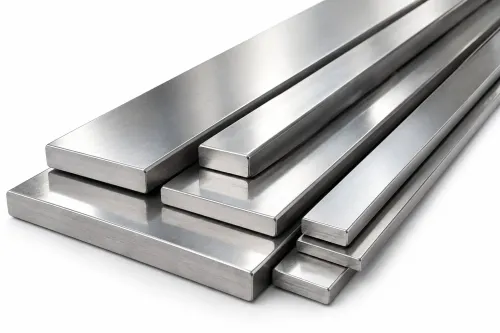

A PTFE sheet can solve a sealing, sliding, lining or insulation problem, but the correct grade and thickness depend on load, temperature, chemicals and movement. By separating these duties and checking the material against practical alternatives, you can identify where PTFE belongs in your equipment—and where it will deform, wear or fail.
Key takeaways
- Use PTFE for chemical-resistant seals, low-friction parts and non-stick liners.
- Allow for PTFE creep, thermal expansion and difficult machining during design.
- Match virgin, filled or expanded PTFE to load, temperature and chemical exposure.
- Specify thickness, dimensions, grade, tolerance and test documents when buying sheet.
Which industrial equipment parts use PTFE sheet around Madurai?
PTFE sheet provides a practical advantage in factory parts that need chemical resistance, low friction, non-stick behaviour or electrical insulation. It is cut into gaskets, flange seals, valve seats, pump parts, slide plates, wear strips, bearing pads, chute liners and pipe liners.
Teflon sheet applications in Madurai are strongest where metal would corrode, seize or contaminate a product; PTFE is not a substitute for a rigid structural plate.
| Part | Practical advantage | Common equipment location |
|---|---|---|
| Gasket or flange seal | Resists acids, alkalis, solvents and leakage across a joint | Chemical tanks, pumps, pipes and flanges |
| Slide plate or wear strip | Reduces friction and prevents sticking | Conveyor guides, machine tables and chutes |
| Bearing pad or guide element | Allows smooth, low-maintenance movement | Hinges, linkages and reciprocating assemblies |
| Liner | Provides a non-stick, corrosion-resistant surface | Hoppers, valve bodies, vessels and food-processing equipment |
| Electrical spacer or washer | Insulates parts while resisting heat and chemicals | Control panels, terminals and heater assemblies |
Check the actual load before specifying PTFE for a moving part. Low friction does not mean high load capacity: pressure, sliding speed, temperature, mating-surface finish and PV limit together determine service life. Industrial Teflon sheet uses also require ventilation during machining, because overheated PTFE can decompose and release hazardous fumes.
A continuous-service range near -200°C to +260°C does not permit a thin, loaded sheet to operate safely at the upper limit.
How should you design and machine PTFE components?
A PTFE part stays functional when you design for creep, thermal movement and elastic recovery—not just its drawing dimensions. For teflon for machine components, define whether the part is a static gasket, sliding pad, guide, liner or electrical spacer; each needs different clearances, support and load limits.
Choose the sheet construction before machining. Skived PTFE, moulded PTFE and expanded PTFE differ in compressibility, anisotropy, creep and thickness tolerance. A gasket specified only as “Teflon, 3 mm” can fit the flange yet lose sealing stress. State the compound too: virgin, glass-filled, carbon-filled or graphite-filled PTFE.
Use these workshop controls:
- Support thin sheet fully during cutting, drilling and clamping; concentrated jaws can bow or permanently mark it.
- Use sharp, properly relieved tools and light, controlled cuts. Heavy cutting forces stretch the part, then elastic recovery changes the finished size.
- Drill undersized pilot holes before enlarging them, and countersink gradually to prevent breakout and distortion.
- Avoid welding or uncontrolled heating near the workpiece. Overheated PTFE can decompose and release hazardous fumes, so provide ventilation.
Allow clearance for PTFE’s high thermal expansion relative to steel, especially around holes, shafts and bolted joints. Check flatness, hole position and sealing thickness after the component returns to its service temperature.
For a loaded pad or liner, add metal backing and limit unsupported spans; PTFE’s low stiffness and creep can otherwise close a gap or misalign moving equipment.
Which PTFE grade and service conditions fit the job?
A continuous rating near 260 °C does not make a thin PTFE sheet safe under load. Check temperature, pressure, exposure time and sliding speed together; compression causes cold flow, while heat accelerates it. For industrial Teflon sheet uses, begin by identifying whether the part seals, slides, insulates or contacts chemicals.
| Grade | Strength gained | Suitable condition |
|---|---|---|
| Virgin PTFE | Maximum chemical resistance, low friction and electrical insulation | Static gaskets, flange seals, liners and food-contact parts; confirm the exact grade |
| Glass-filled PTFE | Better dimensional stability and wear resistance | Compression-loaded pads and guide parts; avoid it where glass particles or abrasion can damage the mating surface |
| Carbon or graphite-filled PTFE | Improved wear performance and heat transfer | Sliding wear strips and bearing pads at controlled PV values; verify electrical requirements |
| Bronze-filled PTFE | Higher load capacity and wear resistance | Slow, loaded sliding parts; check chemical compatibility because the metal filler can corrode |
For movement, calculate PV from contact pressure and sliding speed, then check mating-surface finish, lubrication and temperature. A low friction coefficient does not guarantee load capacity; a fast drive can wear or deform a sheet that works as a slow slide plate. Specify the actual acid, alkali, solvent or oxidizer, concentration, temperature and exposure time.
PTFE resists most chemicals, but molten alkali metals, elemental fluorine and high-temperature fluorinating conditions are exceptions, and permeation can occur. Control overheating because decomposing PTFE produces hazardous fumes. Teflon sheet applications in Madurai need the filler percentage and pressure limit recorded, not simply “virgin PTFE.”
What should you specify when buying PTFE sheet in Madurai?
A purchase request should name the compound, not just say “Teflon.” State whether you need virgin PTFE, glass-filled, carbon-filled, graphite-filled or another grade, and give the filler percentage. Virgin PTFE suits chemical resistance and insulation; filled grades improve stiffness, load capacity or wear resistance but change electrical and chemical performance.
Give a teflon sheet supplier in madurai these details:
- Finished length, width and thickness, plus allowable tolerances
- Skived, molded or expanded PTFE manufacturing route
- Gasket, bearing, slide plate, liner, electrical or food-contact use
- Continuous and peak temperature, pressure, movement speed and contact chemicals
- Required certificate, batch identification, dimensional report or test data
- Bonded installation requiring etched PTFE, or mechanical retention using fasteners, compression or a backed construction
| Sheet type | Key difference | Specify it for |
|---|---|---|
| Skived PTFE | Continuous sheet with directional properties and useful thin gauges | Liners, insulation and general cut parts |
| Molded PTFE | More uniform bulk structure and thicker sections | Gaskets, machined pads and pressure-bearing parts |
| Expanded PTFE | Highly compressible and conformable | Flange sealing on uneven or damaged surfaces |
For teflon sheet for industrial equipment in Madurai, also state whether the part must retain sealing stress, resist abrasive wear or remain electrically insulating. Virgin PTFE alone does not define creep or load rating.
Give Sun Steel Traders the mating-surface details and service limits before they quote; overheating during machining or service requires ventilation because PTFE decomposition fumes are hazardous.
When should you choose another material instead of PTFE?
Choose another material when the part must carry a sustained structural load, resist abrasive impact, or hold tight dimensions under pressure. PTFE is excellent for chemical resistance and low friction, but its low stiffness, creep and relatively poor abrasion resistance make it a weak choice for many teflon for machine components applications.
| Material | Advantage over PTFE | Choose it when |
|---|---|---|
| UHMW-PE | Better impact and abrasive-wear resistance | A chute liner, wear strip or guide faces repeated gritty sliding |
| PEEK | Higher stiffness, strength and dimensional stability at heat | A precision component carries load at elevated temperature |
| Nylon | Greater rigidity and lower cost | The part needs stiffness and operates away from strong acids, alkalis and moisture |
| 316 stainless steel | Structural strength and heat resistance | A support plate, clamp or bearing surface must not creep |
| FKM or EPDM rubber | Elastic sealing and recovery | A seal must follow movement, vibration or flange irregularity |
Do not select PTFE for a heavily loaded sliding pad without checking pressure, speed and wear rate; a filled grade or a different bearing material may last longer. PTFE also becomes the wrong choice where a part must stay rigid, where abrasive particles dominate, or where creep would loosen a joint.
For teflon sheet for industrial equipment in Madurai, reject a specification that names only “Teflon.” State the compound and service limits, then compare them with the actual load, temperature, chemicals and movement. Prevent overheating during machining and service, because decomposing PTFE can release hazardous fumes.
Frequently asked questions
Which industrial equipment parts use PTFE sheet around Madurai?
Factories use PTFE sheet for gaskets, flange seals, valve seats, pump parts, slide plates, wear strips, bearing pads, chute liners and pipe liners.
How should you design and machine PTFE components?
Design for creep, thermal expansion and low stiffness, then use sharp tools, controlled clamping and suitable machining allowances to prevent distortion.
Which PTFE grade and service conditions fit the job?
Choose virgin PTFE for chemical purity and electrical insulation, or filled PTFE when the part needs better wear resistance, stiffness or load capacity.
What should you specify when buying PTFE sheet in Madurai?
State sheet thickness, length, width, grade, colour, tolerance, surface condition, operating temperature, chemical exposure and required inspection documents.
When should you choose another material instead of PTFE?
Choose another material when the part faces high sustained load, severe abrasion, high-speed wear, strong radiation or temperatures beyond PTFE's service limits.
Keywords