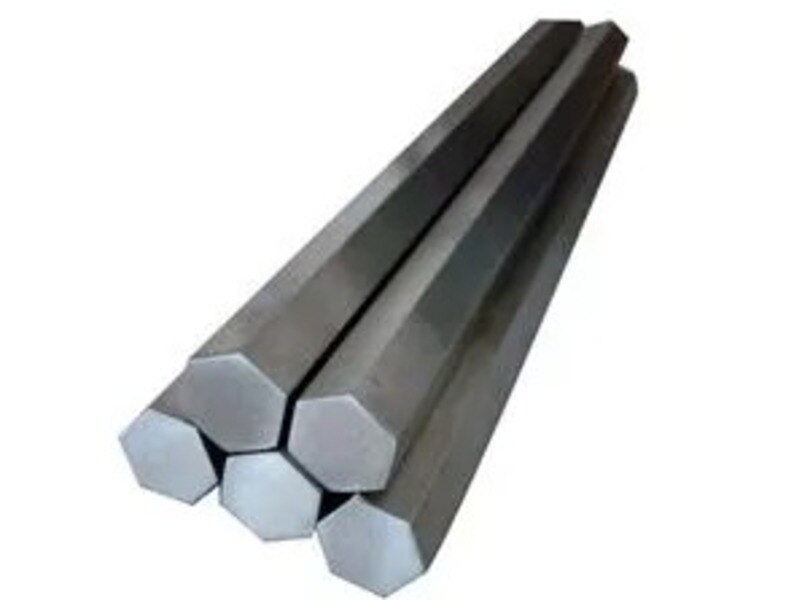
A granite machine component needs more than a bright-looking bar: its hex size, material, straightness, finish and end condition must match the load and movement in service. By the end, you will be able to identify suitable applications, compare hex stock with round and non-steel alternatives, write a usable purchase specification and inspect supplied bars before machining or installation.
Key takeaways
- Use hex flats where tools must apply torque in wet, slurry-filled work areas.
- Match stainless steel, alloy steel or engineering plastic to the failure mode.
- Specify across-flats size, tolerance, finish, straightness, grade and surface condition.
- Inspect for rust, burrs, dents, twist and undersize flats before installation.
Where a hex profile earns its place in granite machinery
Adjustable spacers, threaded adjusters, lock-nut bodies and clamp hardware benefit most from a polished hex section. The six flats let a spanner apply torque during fitting and removal, while opposing flats resist rotation when the part is tightened into a bracket or fixture. That advantage matters where slurry makes gripping a round rod unreliable.
Common polished hex bar uses in granite machinery include:
- Adjustable tooling fixtures, where flats allow quick setting with a wrench.
- Clamp blocks and lock-nut bodies, where the profile prevents unwanted rotation.
- Guide or support pieces, where a fixed orientation helps maintain alignment.
- Short shafts or couplings that need installation flats, but not high-speed dynamic rotation.
| Component | What the hex contributes | Check before choosing |
|---|---|---|
| Adjuster or spacer | Wrench access and repeatable tightening | Confirm the flats clear the surrounding frame |
| Clamp hardware | Anti-rotation under clamp load | Size the corners so they do not foul the clamp |
| Guide support | Orientation and straightforward machining | Verify that sliding contact does not require a round surface |
| Short shaft or coupling | Torque transfer during assembly | Use a round precision shaft for sustained high-speed rotation |
A polished exterior does not make a component a precision shaft, and cut ends can still carry saw burrs that damage seals or stop nuts seating. A request for polished hex for granite machinery in Madurai must identify the alloy or plastic grade, across-flats size and end condition, not just the appearance.
Match the material and profile to the machine’s failure mode
Choose polished hex when the component must resist rotation, accept a spanner or clamp, and remain easy to clean around wet coolant and stone slurry. The six flats also simplify workholding during machining; a round polished rod needs a key, flat or separate fixture.
A hex bar for stone machinery is not automatically stronger because it is polished. Polishing improves cleanability, handling and appearance, but it does not increase yield strength, wear resistance or fatigue life.
| Option | Choose it when | Avoid it when |
|---|---|---|
| Polished hex | A guide, coupling, clamp block or adjustable fixture needs anti-rotation engagement and a cleanable surface | The component needs true rotational balance or runs in a round bearing |
| Round polished rod | A shaft must rotate smoothly in a bearing, seal or rotary coupling | Torque must transfer without a key, or the part must be held against turning |
| Plain MS hex | Cost matters and the machine stays dry or receives reliable paint, plating or oil protection | Coolant and slurry cause rust, staining or seized threads |
| Stainless steel hex or rod | Corrosion from water, coolant and abrasive slurry controls service life; identify the grade and standard, such as ASTM A276/A276M | You are choosing it only by appearance; grade, hardness and galling behaviour still matter |
| Brass hex | Low-friction adjustment, corrosion resistance and easy machining outweigh strength requirements | High loads, impact, abrasive contact or repeated tightening dominate |
| Engineering plastic | Electrical isolation, low weight or low-friction sliding matters | Heat, bending, sharp thread loads or abrasive grit will deform the part |
Select the material from the failure mode, then select hex or round from the load and assembly method.
Write a specification that says more than “polished hex”
A purchase order must identify the alloy or plastic grade, not merely “polished hex.” State the polished hex bar uses: threaded adjuster, spacer, clamp body, guide or anti-rotation shaft. Then define the geometry and inspection method.
- Nominal across-flats size, corner radius, bar length and quantity
- Dimensional tolerance and the EN 10278 tolerance class for bright or cold-finished steel
- Straightness limit over a stated inspection length
- Manufacturing route: cold-drawn, turned, ground or buff-polished
- Surface finish as Ra in micrometres, measured to ISO 21920-1, plus any waviness or form requirement
- End condition: square-cut, chamfered, deburred or machined; specify chamfer width and angle if seating matters
Use a comparison like this to prevent “polished” from becoming an uncontrolled visual description:
| Finish route | What it controls | What to specify |
|---|---|---|
| Cold-drawn | Size and bright appearance | Grade, tolerance class, straightness and corner radius |
| Turned or ground | Geometry and controlled roughness | Across-flats tolerance, Ra, waviness and tool marks |
| Buff-polished | Reflectivity and cosmetic appearance | Ra separately; buffing alone does not prove form accuracy |
Specify whether the across-flats dimension applies before or after plating, coating or polishing allowance. For a moving shaft, add concentricity or runout and do not treat a hex profile as proof of dynamic-shaft suitability. Require a material test certificate when alloy identity affects corrosion or load performance.
Control corrosion, galling and machining damage
Coolant and granite slurry shorten a hex bar for stone machinery’s life when they lodge in scratches, thread roots or clamp interfaces. Flush abrasive residue, dry the component after cleaning and avoid stagnant pools; polishing improves cleanability, not yield strength, wear resistance or fatigue performance.
Choose 304 or 316 when corrosion exposure demands it, rather than selecting free-machining 303 solely for easier cutting.
Protect the component during assembly and fabrication:
- Prevent stainless-on-stainless thread galling with clean threads, adequate clearance, compatible mating material, suitable lubricant or anti-seize, and controlled installation speed. A bright polish does not stop seizure.
- Use sharp, correctly aligned tools and suitable cutting parameters. Excessive heat can create distortion, burrs and heat tint; embedded iron from tooling can become a corrosion site.
- Specify square-cut, chamfered, deburred or machined ends. Saw burrs can cut seals, injure operators and stop nuts or clamp blocks from seating.
- Remove swarf and abrasive residue before assembly. Particles trapped between a hex and its bore can score the guide surface and increase backlash.
- After machining, state whether cleaning, deburring and chemical passivation are required. ASTM A967/A967M covers chemical passivation treatments for stainless-steel parts.
Inspect threaded adjustments after several cycles. Rough spots, rising torque or red-brown staining indicate damage that a final polish cannot repair.
Inspect the supplied bar before it reaches the machine
Before installation, require a traceable material and inspection record, then check the bar against your drawing at goods receipt. A bright surface does not prove the correct alloy, tolerance or finished ends. “Polished hex in Madurai” is a procurement description, not a specification.
1. Ask for the material grade, heat or batch number, applicable standard and test certificate. ASTM A276/A276M covers stainless bars and shapes; it does not define “polished” as a grade. Do not accept 303 stainless in place of 304 or 316 without approval.
2. Send the dimensional sketch and require the quoted across-flats size, corner radius, length, dimensional tolerance and straightness. If EN 10278 applies, name the tolerance class; verify it rather than treating every bright bar as precision stock.
3. State the surface-finish target as a measured parameter, such as the specified Ra value, and ask whether the process is cold-drawn, turned, ground or buff-polished. Record readings on representative faces.
4. Specify the end condition: square cut, chamfered, deburred or machined. Inspect both ends for saw burrs, taper and damage; a polished exterior does not finish the cut ends.
5. Check the certificate, markings and measurements against the purchase order before cutting. A polish hex supplier should identify quantity and cut lengths, not merely write “polished hex.” Sun Steel Traders can be assessed using the same document-and-measurement checklist.
Frequently asked questions
Where does a hex profile earn its place in granite machinery?
Use it for adjustable spacers, threaded adjusters, lock-nut bodies and clamp hardware where a spanner needs reliable flats despite slurry or coolant.
How do you choose material and profile for a granite machine component?
Start with the failure mode: choose for corrosion exposure, galling risk, load, wear, chemical contact and the available tightening tool, then specify the required hex size and shape.
What should a polished hex specification include?
State the material grade, across-flats dimension, dimensional tolerance, surface finish, straightness, length, edge condition, thread details if applicable and inspection documents.
How should you inspect polished hex bar before installation?
Check the batch identification, dimensions across opposing flats, straightness, polish consistency, burrs, dents, rust, machining marks and thread damage before the bar reaches the machine.
Keywords