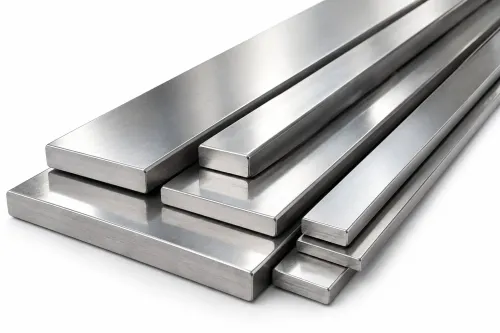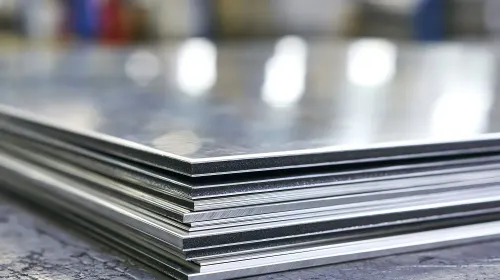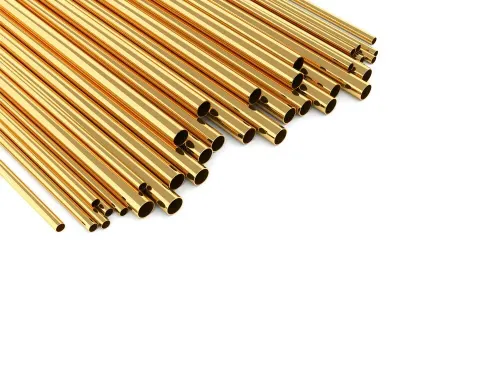
The right buying decision depends on landed cost, not the quoted rupees per kilogram: freight, minimum quantities, cutting, damage, delivery time and excess stock all change the result. You will be able to compare local dealers with mills and distant markets, specify the correct alloy and temper, and test whether delivered material is fit for fabrication.
Key takeaways
- Compare landed cost, including freight, handling, cutting, delays and excess inventory.
- Match your order channel to quantity, urgency, storage space and production schedule.
- Choose alloy and temper from forming, strength, corrosion and welding requirements.
- Check dimensions, surface condition, certificates, heat numbers and alloy markings before acceptance.
When does a local aluminium dealer in Madurai actually save money?
A local aluminium dealer in Madurai saves money when immediate availability, smaller quantities and local delivery outweigh its material premium. Judge “worth it” by landed cost, not ₹/kg alone: add freight from Chennai, Coimbatore or another market, loading, unloading, cutting, handling, damage risk, delayed production and the cash tied up in excess stock.
| Buying route | Main cost pattern | When it wins |
|---|---|---|
| Local stockist | Higher material price, lower freight and faster supply | Urgent repair, short production run, small lot or cut lengths |
| Mill or large distributor | Lower unit price, freight and minimum-order costs | Full bundles, standard production lengths and repeat quantities |
| Distant trader | Variable price and service; verification burden remains with you | Known specifications, competitive freight and reliable delivery |
Ready stock is usually the better calculation for standard sheet, plate, bar, tube or extrusion when a delayed truck would stop fabrication. Distance purchasing can win when full bundles, standard lengths and repeat quantities spread freight and minimum-order charges across usable material.
Ask each source for the same:
- Alloy, temper, dimensions, quantity and cut condition
- Delivery date, freight, cutting charge and expected usable kilograms
- Kerf loss, remnants, handling damage and replacement terms
Then compare usable kilograms and arrival date, not quoted weight alone. The phrase aluminium dealer in Madurai describes a sales channel; it does not prove grade, certification, traceability or stock quality. Request the alloy, temper and certificate or lot details before treating a low price as genuine savings.
Which buying channel fits your quantity and production schedule?
| Buying route | Best fit | Main risk or check |
|---|---|---|
| Local dealer | Small lots, mixed sections, short lengths and fast replenishment | Confirm alloy, temper, dimensions and cut condition |
| Mill or large distributor | Full bundles, repeat schedules and standard lengths | Minimum order, freight and longer lead time |
| General metal trader | Convenient one-off sourcing | Check alloy, temper, traceability, cut accuracy and surface condition |
Choose the route by usable material and production timing, not ₹/kg alone. A local dealer suits an urgent repair or short run; a mill or large distributor becomes competitive when full bundles and repeat quantities spread freight and minimum-order costs. A general trader can save sourcing time, but convenience does not prove material quality.
Ask every quotation to separate material price, freight, cutting charge, kerf loss, remnant policy, deburring, minimum order, delivery date and replacement terms. A cheaper 6 m length is not cheaper if kerf and end damage leave unusable remnants, or if a delayed truck stops fabrication.
When comparing aluminium suppliers in Madurai or aluminium metal dealers in Madurai, ask whether Sun Steel Traders’ ready stock, cut-to-length service and delivery reduce your total job cost; compare that result with a mill or regional distributor rather than assuming locality wins.
Run a repeat-order trial before committing. Measure:
- Delivered weight and actual dimensions
- Heat or lot traceability
- Cut accuracy and damage rate
- Delivery reliability and replacement handling
Keep the supplier whose measured results reduce rework, downtime and excess stock, even when its quoted unit price is not the lowest.
How should you choose aluminium alloy and temper for the job?
Settle the alloy and temper before comparing price: choose 6061-T6, 6063-T5 or 5052-H32 from the job’s loads, forming and finish requirements. A matching dimension does not make 6063-T5 an acceptable substitute for 6061-T6.
| Alloy and temper | Best fit | Critical limitation |
|---|---|---|
| 6061-T6 | Structural and machined parts; higher strength and good machining performance | Welding softens the heat-affected zone, so do not rate the joint at parent-metal strength automatically |
| 6063-T5 | Easily extruded, readily finished architectural profiles and general fabrication | Lower strength; identical dimensions do not make it equivalent to 6061 |
| 5052-H32 | Sheet for bending, forming and corrosion resistance | Its strength and forming behaviour are not interchangeable with 6061 |
“6061 aluminium” is incomplete. State O, T4, T6 or T651: temper changes strength, ductility, residual stress and machining behaviour. An industrial aluminium stockist in madurai should quote the complete specification, not only alloy and dimensions.
Write the order in this sequence:
- Alloy and temper
- Section type
- Thickness or diameter
- Length
- Dimensional tolerance
- Surface finish
- Quantity
Specify mill finish, anodizing-grade, painted, bright or polished separately; finish does not replace alloy and temper. For load-bearing, pressure, lifting, export or traceable work, request a mill test certificate or certificate of conformity showing the alloy, temper, product form, heat or lot number, mechanical properties and dimensions. Match that information to the bundle marking.
Which section and proof checks prevent a bad aluminium purchase?
Choose the section for the load path, not because it is available. A hollow tube or pipe can deliver better stiffness-to-weight performance than solid bar, while solid bar suits machining, pins and concentrated loads.
| Form | Best fit | Confirm before buying |
|---|---|---|
| Sheet | Bending, covers and formed panels | ASTM B209, alloy, temper and millimetre thickness |
| Plate | Machined, structural or heavy flat parts | ASTM B209, thickness, flatness and cut size |
| Flat bar | Tabs, brackets and strips | Width, thickness and straightness |
| Round or square bar | Pins, shafts, blocks and concentrated loads | Diameter or across-flats tolerance |
| Angle | Frames where two flanges suit the joint | Leg sizes, thickness and squareness |
| Pipe or tube | Lightweight frames and members | Outside diameter, wall thickness and intended use |
Do not treat pipe and tube as interchangeable labels: pressure service demands the specified pipe standard, while structural fabrication depends on section dimensions and strength. For extruded bars, rods, profiles and tubes, cite ASTM B221 and state dimensional tolerances; “standard section” is not a specification.
Require alloy and temper, such as 6061-T6, on the quotation or certificate, then match the heat or lot number to the bundle tag. For pressure, lifting, structural, export or traceable work, request a mill test certificate or certificate of conformity.
Measure thickness and section dimensions at several points. Reject stock with dents, scratches, corrosion staining, wrong cut length, poor squareness or un-deburred edges. Specify mill finish, anodizing-grade, painted, bright or polished finish separately; finish never replaces alloy and temper. A reliable aluminium material supplier in Madurai will document each check.
Will the material still perform after cutting, bending and welding?
A suitable alloy and section can still create rework after fabrication. Aluminium scratches easily, while its high thermal conductivity spreads welding heat and increases distortion. Heat-treatable alloys also lose strength in the heat-affected zone, so a welded 6061-T6 joint cannot automatically use the parent metal’s T6 strength.
| Operation | Control the fabricator should specify | Failure if ignored |
|---|---|---|
| Sawing, drilling and milling | Sharp tooling, chip evacuation and aluminium-suitable lubrication | Built-up edge, burrs, dimensional drift and scratches |
| Welding | Aluminium filler metal, shielding gas, cleaning method and controlled heat input | Porosity, distortion and an over-strong design at a softened joint |
| Cut-to-length supply | Saw-cut charge, kerf loss, remnant length, squareness and deburring stated separately | Unusable remnants, extra machining and hidden cost |
Do not copy steel settings or consumables. Remove oxide and contamination with a dedicated stainless-steel brush or approved cleaning process, then control heat input and interpass temperature for the alloy and joint.
Judge cut-to-length service by usable output, not the material price alone. A six-metre extrusion loses length to saw kerf and damaged ends, and a poorly squared blank can waste more time during fixturing than it saves in cutting labour.
Run a pass/fail purchasing trial over several orders. Compare:
- Actual usable yield and machining allowance
- Dimensional consistency, squareness and surface damage
- Lot traceability and delivery reliability
- Replacement handling when a cut or alloy is wrong
Retain the dealer only when these results reduce downtime and rework enough to beat the distant source’s lower nominal price.
Frequently asked questions
When does a local aluminium dealer in Madurai save money?
A local dealer saves money when immediate stock, smaller quantities, local delivery and reduced delay costs outweigh a higher price per kilogram. Compare total landed cost rather than the quoted rate alone.
Which buying channel suits my aluminium quantity and production schedule?
Use a local stockist for urgent work, mixed sizes or small batches. Compare mills, distributors and bulk orders when your demand is predictable and freight and storage will not erase the volume saving.
How do I choose aluminium alloy and temper for fabrication?
Select the alloy for strength, corrosion resistance, machinability and weldability, then select the temper for the required hardness, formability and final performance. Do not substitute 6061-T6 for a forming grade without checking the design.
Which checks prevent a bad aluminium purchase?
Confirm alloy, temper, thickness or diameter, length, section dimensions, tolerances, surface condition and quantity. Request the mill test certificate, heat or lot number and traceable markings before accepting the material.
Will aluminium perform after cutting, bending and welding?
Check the alloy and temper against each operation. Tight bends can crack hardened material, cutting can expose dimensional errors, and welding can reduce strength in the heat-affected zone, especially in heat-treatable alloys.
Keywords