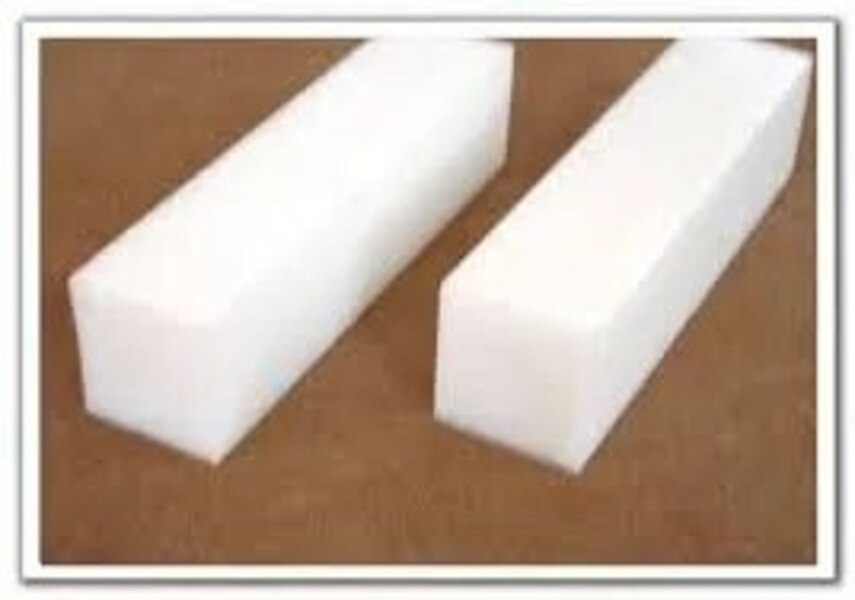
A square nylon bar gives you flat faces, predictable fixturing and built-in resistance to rotation, but the cross-section alone does not make a part suitable for every machine. By the end, you will know which applications benefit from nylon square, how to compare it with other materials, and which grade, dimensions and service data to demand before purchase.
Key takeaways
- Use square nylon when a part must resist rotation without a separate key.
- Choose nylon grade by moisture, load, wear and operating temperature.
- Inspect bar faces, dimensions, voids and warping before precision machining.
- Specify grade, square dimensions, length and machining tolerance when buying.
Why a square nylon bar works well for machine parts
A square nylon bar gives you a built-in anti-rotation feature that round nylon rod cannot provide without a key, clamp or additional machining. Its four flat faces also create stable wear surfaces, simplify drilling and milling, and hold more securely in a vice or fixture.
That makes nylon square for machine parts useful when low weight, quiet running, electrical insulation and corrosion resistance matter.
The practical nylon square benefits in Madurai include:
- A guide block or sliding stop can move along a keyed path without turning.
- A flat face gives a chain guide, wear block or scraper consistent contact with the moving component.
- Spacers, brackets and fixture blanks are easier to locate against straight edges than round stock.
- Cutting a square bar into blanks produces less unusable material than cutting the same envelope from a round bar.
- Nylon reduces rattling and surface damage where a steel part would add noise, weight or marking.
Square stock is not automatically more accurate than round stock. Check flatness, squareness, corner radius, internal stress and machining allowance before making a precision part. Nylon also absorbs moisture; in humid Madurai storage, water can reduce stiffness and dimensional stability, so machine and inspect the bar in a condition representing service.
| Option | Practical advantage | Limitation |
|---|---|---|
| Square nylon bar | Anti-rotation, flat contact and easy fixturing | Requires checks for squareness and flatness |
| Round nylon rod | Smooth rotation and simple turning | Needs extra features to prevent rotation or provide a flat wear face |
Where nylon square is better than round stock, sheet and metal
Choose an engineering plastic square bar when the part must resist turning, present a flat wear face, or clamp securely without milling a square from round stock. Guide blocks, keyed sliding blocks, wear strips, spacers, stops, brackets, simple fixtures and machine-part blanks are good fits.
Cutting near the finished width can also reduce waste compared with machining a blank from sheet.
| Option | Advantage of nylon square | Choose the alternative when |
|---|---|---|
| Round nylon rod | Provides an anti-rotation profile and flat contact faces without extra milling | The part is a bush, roller, shaft guide or fully rotational component |
| Nylon sheet | Produces long, broad wear strips and large plates | You need a compact block, spacer or keyed slide rather than a flat panel |
| Acetal square | Nylon offers higher toughness and useful wear performance | Lower moisture absorption, greater dimensional stability or easier precision machining matters more |
| UHMW-PE square | Nylon provides greater stiffness and better load-bearing shape retention | Very low friction, impact resistance and chemical resistance outweigh stiffness |
| Metal square bar | Nylon avoids corrosion, reduces weight and electrically insulates | High temperature, extreme stiffness, heavy impact or sustained high load controls the choice |
Nylon square is not automatically more stable than round nylon rod. Moisture absorbed in Madurai air plasticises nylon, changing stiffness and dimensions, so compare bars in the same conditioning state and machine parts for their actual service environment.
For dry-running slides or wear strips, specify the mating material, speed, load, temperature and humidity. Choose an internally lubricated grade, such as Nylon MoS2, only when its wear or PV data match those conditions; plain nylon is not automatically self-lubricating.
Choose the nylon grade for moisture, load, wear and heat
Choose the grade from the operating conditions, not from the label “nylon square.” PA6, PA66 and cast PA6 differ in water absorption, stiffness, wear resistance, machining behaviour and temperature capability.
| Option | Moisture and load | Wear and heat | Choose it when |
|---|---|---|---|
| Cast nylon, cast PA6 | Handles substantial sections and impact; absorbed moisture reduces stiffness and dimensional stability | Good general wear performance; verify continuous and peak temperature | You need guide blocks, spacers, stops or a large nylon square for machine parts |
| Extruded nylon, PA6 or PA66 | More consistent stock dimensions; PA66 offers higher temperature capability but absorbs moisture | Suitable for moderate load and sliding; check the datasheet for the exact grade | You need predictable machining stock or smaller precision parts |
| Standard nylon | Strength and insulation vary with humidity; do not assume identical electrical performance | Suitable for intermittent contact, moderate speed and controlled load | You can provide lubrication or the part has limited sliding duty |
| Internally lubricated nylon, such as Nylon MoS2 | Reduces dependence on external lubrication; confirm load and dimensional requirements | Better dry-running friction and wear behaviour; compare PV data at your speed and counterface | The part is a slide, wear strip or bearing surface operating dry |
Ask for wear or PV data against the actual mating material, not only tensile strength. Check service temperature, peak temperature, load, speed, humidity and chemical concentration against the manufacturer’s datasheet. Strong acids and oxidising agents require specific compatibility checks.
Machine and inspect the part in moisture conditions close to service, or dimensional changes can invalidate the fit.
Check the bar before machining a precision component
A bar fits a precision drawing only when its side size, corner geometry, machining allowance and moisture condition match the finished-part inspection plan. “Nylon square” is not enough: an engineering plastic square bar can arrive with flatness error, out-of-square faces or a corner radius that removes the material you expected to machine.
1. Confirm the stock dimensions against the drawing. Record nominal side size, length, supplier tolerance, flatness, squareness and corner radius. Measure across each face at several points, not just one end. Check that the radius will not interfere with a keyed slot, bearing face or fixture contact.
2. Calculate allowance on every machined face. Leave enough material to remove bow, twist, saw marks and surface skin, but do not choose excessive oversize for a thin guide or spacer; internal stress can release during machining and move the part out of tolerance.
3. Check the material identity before cutting. Confirm cast or extruded grade, colour, virgin or reprocessed status, and the certificate of conformity if the drawing requires traceability. A nylon square in Madurai may have changed moisture content during storage or transport.
4. Inspect and machine in a recorded condition. Store the bar sealed or protected from uncontrolled humidity, then measure it at the moisture state representing service. Use sharp tools, clear chips and low heat; inspect after the bar and part have stabilised, because heat and moisture can change nylon dimensions.
What to specify when buying nylon square in Madurai
Put more than “nylon square” on the purchase order. For a controlled part, give the nylon square bar supplier a complete specification and ask for written confirmation against these points:
- Nominal side size and finished length, with dimensional tolerance and allowable straightness.
- Polymer family and grade: PA6, PA66, cast PA6, heat-stabilised nylon or an internally lubricated grade.
- Virgin or reprocessed material, specified colour, and corner radius; do not leave the radius to the cutter.
- Moisture or conditioning state at dispatch, plus packaging that protects the bar from uncontrolled humidity changes.
- Required certificate of conformity, batch or lot identification, and the manufacturer’s datasheet for the stated grade.
- Continuous service temperature, peak temperature, load, speed and chemical exposure; verify these against the grade’s datasheet rather than the word “nylon”.
- Wear or PV data for your actual counterface and operating condition, not only tensile strength.
- Dielectric strength, volume resistivity and water-absorption data if the part is electrical, because absorbed moisture reduces insulation performance.
For nylon square in Madurai, record whether the incoming bar is dry, sealed or moisture-conditioned before checking dimensions. Comparing a dry bar with a conditioned production part can make an acceptable tolerance appear wrong. If you compare quotations from Sun Steel Traders and another supplier, send both the same drawing, conditioning state and verification list.
Frequently asked questions
Why does square nylon work well for machine parts?
Its four flat faces provide anti-rotation surfaces, stable wear faces and secure holding in a vice or fixture.
When is nylon square better than round stock, sheet or metal?
Choose it when you need built-in anti-rotation, easy drilling and milling, or lower weight and corrosion resistance than metal.
How do you choose a nylon grade for industrial parts?
Match the grade to moisture exposure, load, wear rate and operating temperature rather than selecting by shape alone.
What should you check before machining a nylon square bar?
Check the grade, face dimensions, straightness, surface condition, visible voids and warping before making a precision component.
What should you specify when buying nylon square in Madurai?
State the nylon grade, cross-section size, length, required tolerance, quantity and intended application when contacting a supplier.
Keywords