A granite workshop needs more than a quotation marked “SS square rod”: grade, solid or hollow section, size, finish and fabrication condition all affect service life. By the end, you can match 304 or 316 to water and chloride exposure, estimate handling weight, and write a purchase enquiry that prevents costly substitutions.
Key takeaways
- Choose 304 for dry indoor frames; choose 316 for wet, saline or outdoor exposure.
- Specify a solid square bar using grade, width, thickness, length and finish.
- Select section size by stiffness, weight and the fixture’s actual load.
- Confirm stock, test documents, cutting and delivery details in writing.
Choose 304 or 316 for the workshop’s actual exposure
304 is the usual choice for dry indoor cutting-table frames, guards, brackets, jigs and trolley parts. Choose 316 when the bar stays continuously wet beside water-fed saws or polishing machines, contacts saline water, traps slurry in crevices, is difficult to wash and dry, or faces outdoor exposure.
| Grade | Suitable exposure | Purchasing decision |
|---|---|---|
| 304 | Dry, protected indoor fixtures | Standard economical choice |
| 316 | Continuous wetting, chlorides, trapped slurry or outdoors | Higher cost justified; better resistance to chloride pitting |
| 201 or 202 | Lower-cost, dry applications | Do not accept as substitutes for 304 or 316 in continuously wet areas |
| 17-4 PH | Specialist high-strength components | Usually unnecessary for ordinary guards, frames and trolleys |
316 contains molybdenum and resists chloride pitting better than 304, but it is not corrosion-proof. Granite slurry, trapped moisture, rough surfaces and carbon-steel contamination can still cause staining or pitting.
A quotation stating only “SS” or “18/8” is incomplete: “18/8” broadly describes chromium and nickel content, not a fully traceable grade selection. For SS square rod in Madurai, request the actual designation, such as ASTM 304 or ASTM 316, plus a mill certificate identifying the heat or batch.
The same applies when sourcing industrial stainless steel rod in Madurai: state the water exposure and cleaning practice, rather than accepting a generic grade.
Specify a solid square bar, not a square tube, by its full dimensions
Write the enquiry for a solid square bar, not a square tube, because a hollow tube has an internal void and cannot replace a solid section. SS square rod and stainless steel square bar usually mean the same product; “bar” is the clearer term for mill documentation and a stainless steel square rod in Madurai.
Include every item below:
- Grade: 304, 316 or another specified designation; do not accept only “SS” or “18/8”.
- Nominal across-flats size: state 10 mm, 12 mm or 20 mm. These are different purchasing choices, not interchangeable “small” sizes.
- Individual length or cut lengths, plus the permitted cut tolerance.
- Dimensional tolerance, straightness tolerance and required corner radius.
- Finish: cold-drawn, bright-finished, hot-finished or pickled.
- Material test certificate, heat or batch number and marking requirements.
Cold-drawn or bright-finished bar normally provides more uniform dimensions and appearance. Hot-finished or pickled stock can suit brackets, frames and fixtures where appearance is secondary. A bright surface does not prove a superior grade.
Corner radius changes clamp contact, usable flat width and the fit of welded joints. State it on the drawing or purchase order rather than leaving it to supplier interpretation.
Reference ASTM A276/A276M for wrought stainless bars and shapes, and ASTM A484/A484M for general dimensional, finish, marking and testing requirements. Give this complete specification to an SS square bar supplier in Madurai so the quotation identifies the actual product.
Match section size to stiffness, weight and the fixture’s job
Select section size by the fixture’s span, load and handling limits, not by appearance alone. For solid stainless square bar, kg/m is approximately 0.0079 × side in millimetres squared. A 10 mm bar weighs about 0.79 kg/m, 12 mm about 1.14 kg/m and 20 mm about 3.16 kg/m, before dimensional variation.
A larger solid section resists bending better, but adds load to trolleys, clamps, hinges and lifting equipment. Use smaller sections for light jigs and guards, medium sections for brackets and guide supports, and larger sections for table frames or heavily loaded trolley components only after checking span and load.
- Solid square bar: four faces simplify joining and clamping.
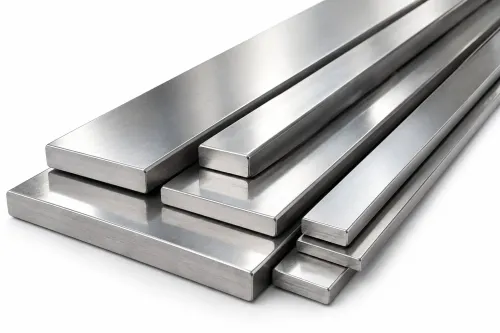
- Flat bar: suits plates, tabs and strap-like brackets.
- Round rod: suits pins, axles and shafts.
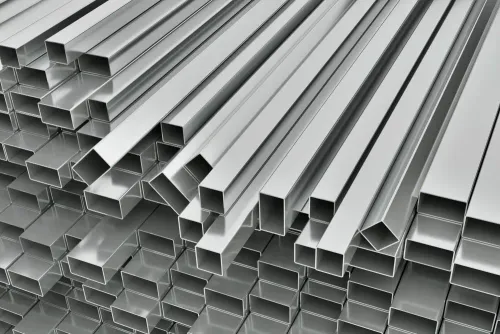
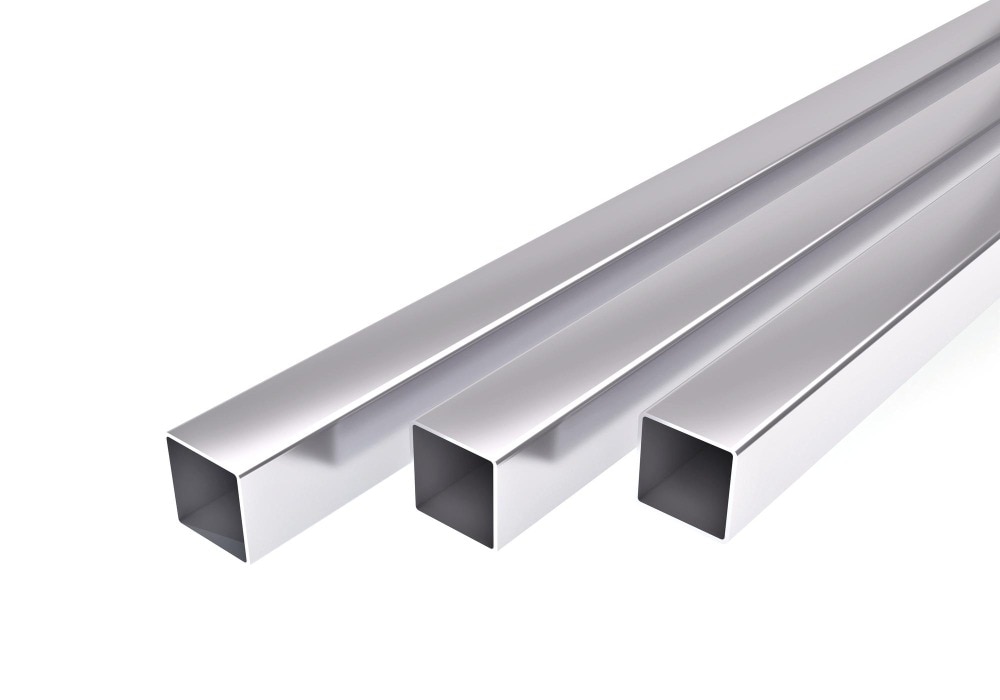
- Square tube: reduces weight, but check wall thickness, local buckling and dent resistance before substituting it.
| Material or shape | Main advantage | Main compromise |
|---|---|---|
| Solid stainless square | Corrosion resistance and four clamping faces | Higher mass and cost |
| Mild-steel square | Lower cost, easy welding and high stiffness | Rust protection, paint maintenance and heavier handling |
| Aluminium square | Low weight and corrosion resistance | Lower stiffness, specialised welding and higher cost |
| Square tube | Lower weight for frames | Hollow walls can dent and need verified thickness |
For a square rod dealer in madurai, compare the quoted mass with the required length before approving transport or lifting arrangements.
Plan welding, drilling and cleaning before the bar reaches fabrication
A 304 or 316 square bar is generally weldable, drillable and machinable, but cutting and drilling create work hardening. An industrial stainless steel rod in Madurai still needs sharp tools, firm feed pressure and suitable coolant; never rub a blunt drill bit against the surface.
1. Confirm the fabrication allowance before ordering. Add material for mitres, cut-length corrections and heat distortion when building frames, guards or brackets. A nominal length can become short after squaring, trimming and correcting welded joints.
2. Select the finish for the fixture’s exposure. Polished surfaces clean more easily but cost more; mill or bright finishes suit hidden structural fixtures. Do not choose a bright appearance as proof of a superior grade.
3. Control contamination during fabrication. Granite slurry, abrasive dust and trapped water collect on horizontal faces, in crevices, around welds and at cut ends. Use stainless-only abrasive wheels, brushes, supports and racks, or clean shared equipment thoroughly before stainless work.
4. Remove heat tint and embedded iron contamination instead of painting over them. Mechanical cleaning followed by suitable pickling or passivation can restore corrosion resistance after welding. Select the chemical process for the 304 or 316 grade and the required finish; excessive grinding creates low spots and visible patches.
Leave drainage and wash access around the finished assembly. A surface that traps slurry will stain faster than one that can be rinsed, dried and inspected.
Use a written stock check when comparing Madurai suppliers
A quotation from an SS square rod supplier in Madurai is comparable only when it confirms the exact size and grade in stock, not merely “stainless square rod.” Send this written checklist to every square rod dealer in Madurai:
- Grade; solid or hollow cross-section; nominal across-flats size; corner radius; finish; ASTM A276/A276M and ASTM A484/A484M standard; individual length; cut tolerance; straightness; batch traceability; and MTC availability.
- Ask whether the stock is cold-drawn, hot-finished, bright-finished or pickled.
- Confirm whether cutting, drilling, mitring or welding is included, or charged separately.
A simple mass check catches errors in transport and handling estimates. For solid bar, use kg/m = 0.0079 × side²: a 20 mm bar is about 3.16 kg/m, so 6 m weighs roughly 18.96 kg before dimensional variation.
| Option | Suitable condition | Procurement warning |
|---|---|---|
| 304 | Dry indoor fixture | Economical when water and slurry are controlled |
| 316 | Constantly wet support | Costs more, but resists chloride pitting better |
You can consider Sun Steel Traders when requesting a Madurai quotation if you send this complete specification, then check the delivered marking and certificate against it. For SS square rod in Madurai, choose 304 for a dry indoor fixture; choose 316 for constant wetting, where 304 can create a false saving.
Frequently asked questions
Should a granite workshop choose 304 or 316 stainless steel square rod?
Choose 304 for dry indoor cutting-table frames, guards, brackets, jigs and trolley parts. Choose 316 for continuous wet exposure, saline water, trapped slurry, difficult cleaning or outdoor use.
How do you specify a solid stainless steel square bar?
State that you need a solid square bar, then give the stainless grade, width, thickness, length, surface finish and required quantity. This prevents a square tube from being supplied.
How should you choose the square bar size?
Match the section size to the fixture’s load, span, stiffness requirement, available weight and fabrication method. A larger section adds rigidity but also weight, cost and drilling effort.
What should you confirm with an SS square bar supplier in Madurai?
Confirm grade, dimensions, available length, finish, quantity, batch or test documentation, cutting service, delivery timing and whether the stock is solid bar rather than tube.
Keywords