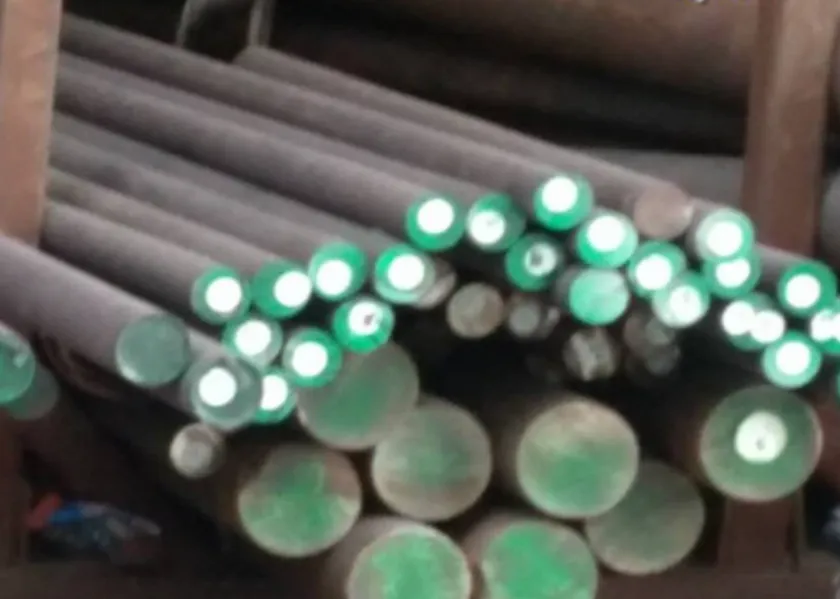
EN 8 is a widely recognised medium-carbon steel used in many general engineering and manufacturing applications. Its combination of machinability, strength and heat-treatment potential makes it useful for components that require better mechanical performance than ordinary low-carbon steel.
However, buyers comparing EN 8 rod suppliers in Madurai should not assume that every round bar sold under this name will automatically suit every shaft, pin or machine part. Size, supply condition, processing and test requirements must be aligned with the component drawing.
Where EN 8 Rods Are Commonly Used
EN 8 may be considered for components such as:
- Shafts and axles
- Pins
- Studs and bolts
- Spindles
- Keys
- General machine parts
- Automotive components
- Couplings
- Selected gears and fasteners
Actual suitability depends on component geometry, loading, heat treatment and the governing design standard. Critical components require engineering verification rather than selection from a general application list.
EN 8 Compared with Mild Steel
Mild steel is commonly used for fabrication because it is economical, readily workable and weldable with appropriate procedures. EN 8 normally offers higher carbon content and can provide improved strength and hardness for machined engineering components.
EN 8 may be preferred when a part requires:
- Better strength than ordinary mild steel
- Improved wear performance after suitable treatment
- Reliable machining for shafts or pins
- Defined mechanical properties
- A balance between cost and engineering performance
Mild steel may remain suitable for brackets, frames, welded structures and lightly loaded parts. The decision should follow the drawing and service requirements.
Black Bar and Bright Bar Considerations
Depending on availability, EN 8 may be supplied in different surface conditions. Hot-rolled or black bars can be economical for components requiring substantial machining. Bright bars can offer better dimensional consistency and surface finish for some manufacturing processes.
When comparing them, consider:
- Machining allowance
- Surface scale
- Straightness
- Diameter tolerance
- Final component finish
- Production quantity
- Total machining cost
A lower material rate may not be economical if extra turning time is required to reach the finished size.
Heat Treatment Must Be Planned
EN 8 can respond to suitable heat-treatment processes, but the required result depends on section size and procedure. Buyers should not specify only “hardened EN 8” without defining the required properties.
The component drawing or purchase specification should state any necessary:
- Hardness range
- Tensile properties
- Heat-treatment condition
- Testing method
- Surface treatment
- Final machining requirement
Heat treatment can also cause distortion, so allowances should be included for precision components.
What to Include in an Enquiry
A procurement request should identify:
- EN 8 grade or equivalent specification
- Diameter and length
- Quantity
- Surface or supply condition
- Dimensional tolerance
- Test-certificate requirement
- Cutting requirement
- Delivery schedule
This information allows suppliers to check the appropriate stock rather than quoting a broadly similar product.
Supporting Production in Madurai
Engineering businesses in Madurai and neighbouring Tamil Nadu markets use EN-series steels for machine building, repair, fabrication and component manufacturing. Local sourcing can help buyers inspect available sizes, arrange cut pieces and respond more quickly to maintenance requirements.
Sun Steel Traders supplies EN 8 rods along with other ferrous and non-ferrous industrial materials in Madurai. Buyers can submit drawings or dimensional schedules when a requirement includes multiple sizes.
Avoid These Common Buying Errors
Problems often begin when purchasers:
- Order by diameter without stating the grade
- Accept an alternative grade without approval
- Ignore machining allowance
- Assume certificates are included
- Overlook straightness for long shafts
- Purchase an insufficient quantity for cutting losses
- Choose stock condition only by rate
EN 8 remains a practical general-engineering steel when it is correctly specified. A disciplined enquiry covering grade, size, condition and processing requirements gives manufacturers a stronger foundation for consistent machining and component performance.
Keywords